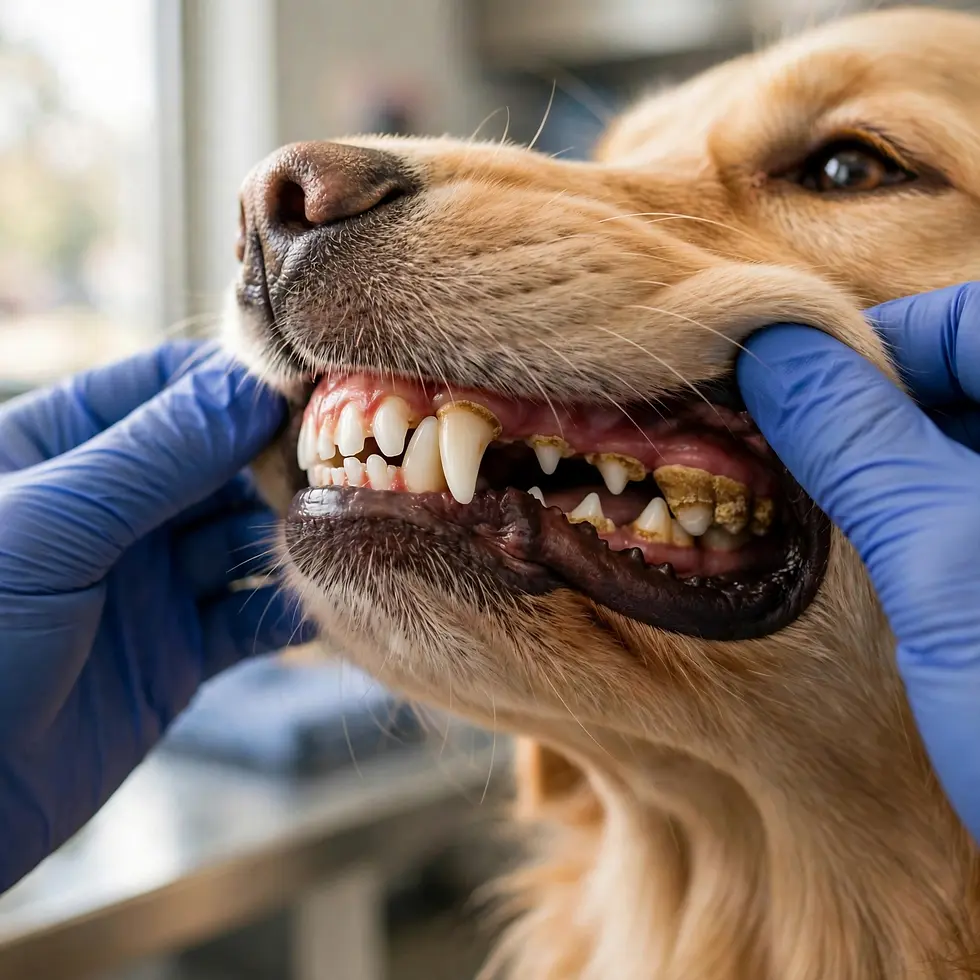
🐶 Dental disease is more than bad breath or stained teeth. Plaque can harden into tartar, leading to painful gums, infection and tooth loss. Regular veterinary checks and daily home care help keep your dog comfortable and healthy. 🩺
👀 Signs to watch for
Contact us if you notice:
😮💨 Persistent bad breath.
🟡 Yellow or brown tartar on the teeth.
🩸 Red, swollen or bleeding gums.
🍽️ Dropping food, chewing differently or eating more slowly.
🦷 Loose or broken teeth.
🤕 Swelling around the face or jaw.
Some dogs show few obvious signs of pain, so regular dental examinations are important even when they seem to be eating normally.
🪥 Caring for your dog’s teeth at home
Daily brushing is the most effective way to reduce plaque. Use a soft toothbrush and toothpaste made for dogs—never human toothpaste. 🐕
Introduce brushing gradually with short, calm sessions, gently brushing the outer surfaces of the teeth and gumline. If your dog’s gums look painful or inflamed, arrange a veterinary examination before continuing.
Dental chews, dental diets and water additives can provide extra support, but they do not replace brushing. Avoid very hard items such as bones, antlers and hooves, which can damage teeth. ❌
🏥 When professional treatment is needed
Brushing cannot remove established tartar or treat disease beneath the gums. A veterinary dental examination allows us to assess your dog’s mouth and recommend appropriate treatment. 🩺
Treatment is performed under general anaesthesia so we can examine the mouth thoroughly, take dental X-rays and clean below the gumline safely and comfortably. 😴
📞 Book a dental check
If you are concerned about your dog’s breath, teeth or gums, contact our team to arrange a dental examination. We can assess your dog’s oral health and help you build a practical home-care routine. 🐾
📍 SPK Animal Hospital — San Po Kong, Hong Kong
📞 Book via Whatsapp 67639007 or call 24202266
* Disclaimer
The content in this pet owner handbook is provided for general informational and educational purposes only. It is not intended to replace professional veterinary advice, diagnosis, or treatment. Every pet’s health situation is unique and requires individual assessment by a qualified veterinarian. If you have concerns about your pet’s health or behavior, please consult a registered veterinary surgeon licensed with the Veterinary Surgeons Board of Hong Kong. In case of emergency, contact your veterinarian or nearest veterinary clinic immediately.